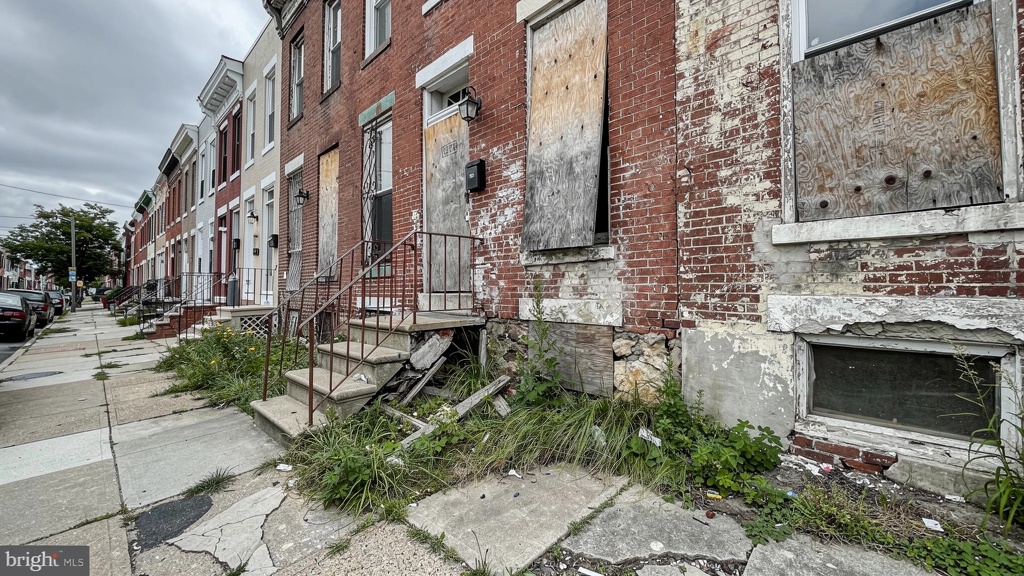
A Philadelphia rowhome in need of significant repairs. City assessed values frequently do not reflect a property's true market value — a difference that can meaningfully affect Pennsylvania inheritance tax liability.
Many executors assume that the City of Philadelphia's assessed value is the same as a property's fair market value. In some cases, that assumption can be costly — and the difference between those two numbers can mean paying thousands of dollars more in Pennsylvania inheritance tax than the estate actually owes.
A Real Situation: What Actually Happened
Recently, I worked with an executor who had completed his own Pennsylvania inheritance tax return. Before filing, he asked me to review the paperwork. It was a thoughtful decision — one that ended up saving the estate a significant amount of money.
What I discovered surprised him.
The estate included a Philadelphia property that required significant repairs and renovation. The home was essentially a shell — it was not in move-in condition by any reasonable measure. It needed substantial work before it could be occupied or sold at a standard market price.
"The executor had done everything right — gathered the documents, prepared the return, was ready to file. He just used the wrong number for the property. That one number was about to cost the estate $12,000."
When preparing the inheritance tax return, the executor used the City of Philadelphia's assessed value for the property. This is an understandable mistake. The assessed value is an official government figure, it appears on city records, and it seems authoritative.
The assessed value was approximately $220,000 to $230,000.
At first glance, that may seem reasonable. However, the property's actual condition told a very different story.
The Number That Mattered: What the Market Actually Said
After reviewing the property and analyzing the situation carefully, it became clear that the assessed value did not accurately reflect the home's true market value. The property's condition — the extent of repairs needed, the work required to bring it to a sellable state — simply wasn't reflected in the city's figure.
The property eventually sold for approximately $140,000.
That is a difference of roughly $80,000 to $90,000 between the assessed value and the price a willing buyer was actually willing to pay in the real Philadelphia marketplace.
By correcting the property valuation before filing — using fair market value instead of the city's assessed value — the executor avoided approximately $12,000 in unnecessary Pennsylvania inheritance tax.
How the Numbers Work: Assessed Value vs. Fair Market Value
To understand why this matters so much, it helps to see the numbers side by side.
| Valuation Method | Property Value Used | Est. Inheritance Tax (4.5%) |
|---|---|---|
| City Assessed Value (original return) | ~$225,000 | ~$10,125 |
| Fair Market Value (actual sale price) | ~$140,000 | ~$6,300 |
| Difference — Tax Saved | ~$85,000 lower value | ~$3,825 per beneficiary |
Pennsylvania inheritance tax is calculated on the value of estate assets. The tax rate that applies depends on the relationship between the decedent and the beneficiary — 4.5% for lineal heirs, 12% for siblings, 15% for other beneficiaries. When multiple heirs share an estate, an overvalued asset multiplies the overpayment across every beneficiary's share. The total tax savings in this case was approximately $12,000 across the estate.
Have an inherited property in Philadelphia with a city assessment that seems higher than what the home is actually worth? We help families coordinate with appraisers and tax professionals who understand how property condition affects inheritance tax valuations.
Call Us: 215-607-8607Why City Assessed Value and Fair Market Value Are Not the Same Thing
The City of Philadelphia's Office of Property Assessment determines assessed values for the purpose of calculating annual property taxes. This is an entirely different process from determining what a home would actually sell for in the open market.
Assessed values are based on mass appraisal models — statistical analyses applied to large groups of properties — and are not individual property inspections. They often lag behind market conditions and rarely account for a specific property's current physical condition.
For Pennsylvania inheritance tax purposes, the correct value is fair market value — the price at which a property would change hands between a willing buyer and a willing seller, neither being under any compulsion to buy or sell, with both having reasonable knowledge of the relevant facts.
These two numbers can be very different — especially when a property has significant problems.
Factors That Can Lower a Property's True Market Value
Many Philadelphia properties — particularly older rowhomes and rowhouses that have been in families for decades — have real-world conditions that significantly reduce what a buyer would actually pay. Factors that can lower a property's fair market value below its assessed value include:
- Major repair needs — roof replacement, HVAC systems, plumbing, electrical updates, or structural repairs all reduce value
- Fire or water damage — even partially remediated damage affects the pool of buyers and the price they'll pay
- Structural problems — foundation issues, compromised load-bearing elements, or serious settlement concerns can substantially reduce value
- Deferred maintenance — years of deferred upkeep can compound into significant repair costs that buyers factor into their offers
- Vacancy and deterioration — vacant properties deteriorate faster and often require additional work to become insurable or financeable
- Tenant complications — inherited rental properties with problem tenants, below-market leases, or housing code violations may sell at a significant discount
- Market conditions — the neighborhood's current market, days on market, and the available buyer pool all affect realistic sale price
- Condition at the time of death — the value must reflect the property's condition as of the date of death, not after any improvements made by heirs
A home that needs extensive work may have a fair market value significantly below its assessed value — as this case illustrated with an $80,000+ difference. Using the city's number without accounting for these factors can result in a substantial overpayment of inheritance tax.
What Every Executor Should Know Before Filing
Executors and administrators are often handling estate matters for the first time. It is entirely natural to reach for official-looking numbers — and the City of Philadelphia's assessed value certainly looks authoritative. It appears on government records, it is easy to find, and it has the weight of a city agency behind it.
But for Pennsylvania inheritance tax purposes, that number is not the right number unless it happens to equal what the property would actually sell for in its current condition.
Steps every executor handling Philadelphia real estate should consider:
- Do not automatically use the city's assessed value. Look at the property's actual condition first. If it needs significant work, the assessed value may be materially higher than fair market value.
- Consider obtaining a formal appraisal. A licensed appraiser who physically inspects the property and reviews comparable sales can provide a defensible, documented value that accurately reflects current conditions.
- Document everything. Repair estimates, contractor bids, inspection reports, and comparable sales all support a lower valuation if the return is ever questioned.
- Have the return reviewed before filing. As this case shows, a review before filing — not after — is when corrections are easiest and least costly to make.
- Work with professionals who understand Philadelphia real estate. Local market knowledge matters when evaluating inherited properties. A professional familiar with the specific neighborhood and property type can provide much more accurate guidance than a general estimate.
Serving as executor of a Philadelphia estate and unsure how to value an inherited property for inheritance tax purposes? We help families navigate these practical challenges and connect with the right professionals for their situation.
Call Us: 215-607-8607The Lesson: A Review Before Filing Can Save Thousands
The executor in this situation did one thing that made all the difference: he asked for a review before submitting the return. That single decision saved the estate approximately $12,000.
Many people are surprised to learn that a property's tax assessment and its fair market value can be so different. The gap is especially pronounced for properties needing significant work — a common situation in Philadelphia, where the housing stock includes many older homes that have been in families for generations.
A careful review of estate assets — particularly real property — can sometimes identify issues that save an estate thousands of dollars. For inherited properties in less-than-perfect condition, the difference between using the assessed value and an accurate fair market value can be substantial.
The cost of getting it right before filing is almost always far less than the cost of discovering the mistake afterward.
Frequently Asked Questions
- Does Philadelphia's assessed value determine how much inheritance tax I owe?
- No. Pennsylvania inheritance tax is based on the fair market value of estate assets — not the City of Philadelphia's assessed value. The city's assessment is used for calculating annual property taxes and is generated through a mass appraisal process that may not reflect a property's actual physical condition or current market value. For inherited real estate, particularly properties needing significant repairs, fair market value can be substantially lower than the assessed value.
- What is fair market value for Pennsylvania inheritance tax purposes?
- Fair market value is the price at which a property would change hands between a willing buyer and a willing seller, neither being under any compulsion to buy or sell, and both having reasonable knowledge of the facts. For real estate, this means the price the home would realistically sell for in its current condition — accounting for any needed repairs, structural issues, market conditions at the time of death, and comparable sales in the area. A formal appraisal is typically the best way to document fair market value.
- Can Pennsylvania inheritance tax returns be amended after filing?
- In many situations, yes. If an overpayment is discovered after a return has been filed, it may be possible to file an amended return and request a refund. However, these corrections are subject to specific deadlines and procedural requirements under Pennsylvania law. If you believe an overpayment may have occurred, consult with a qualified estate attorney or tax professional as soon as possible — waiting can limit your options.
- Should I obtain a professional opinion of value for an inherited Philadelphia property?
- For most estates containing real property — especially older homes, properties needing repairs, or properties where the city's assessed value seems significantly higher than realistic sale price — a formal appraisal or documented professional opinion of value is strongly recommended. A licensed appraiser who physically inspects the property provides a defensible, documented value that reflects the home's actual condition. This documentation is particularly important when the assessed value and market value differ substantially.
How Probate Philly Can Help
Probate Philly is not a law firm and does not provide legal or tax advice. However, we help Philadelphia families navigate the practical side of estate settlement — including inherited property decisions, estate administration responsibilities, and connecting families with the right real estate, tax, and legal professionals for their situation.
If you are serving as executor of a Philadelphia estate, dealing with an inherited property that needs significant work, or simply trying to understand how to approach the estate settlement process correctly, we are here to help.
Understanding the difference between assessed value and fair market value — and making sure the right number is used on the inheritance tax return — is exactly the kind of practical guidance we provide.
Speak with a Philadelphia Estate Settlement Expert today. Call 215-607-8607 or contact us online for a confidential conversation about your estate situation.